All Platforms
Company Updates
News, product launches, awards, and insights from instarea — all in one place.
222 posts
2026
24 posts
Who builds CAMARA network APIs in Central Europe, and what the operator and the integrator each have to do
A bank or an online shop no longer has to send an SMS code to check that a number is really in this phone or that the SIM was not swapped yesterday: it asks the network directly through a CAMARA API. Our overview covers who builds this in Central Europe, including alternatives (Vonage, Infobip, Nokia). For Slovak Telekom and T-Mobile Czech Republic (Deutsche Telekom group) this part is built by the instarea team. Technically operational 2026/2027; commercial launch is each operator's decision.
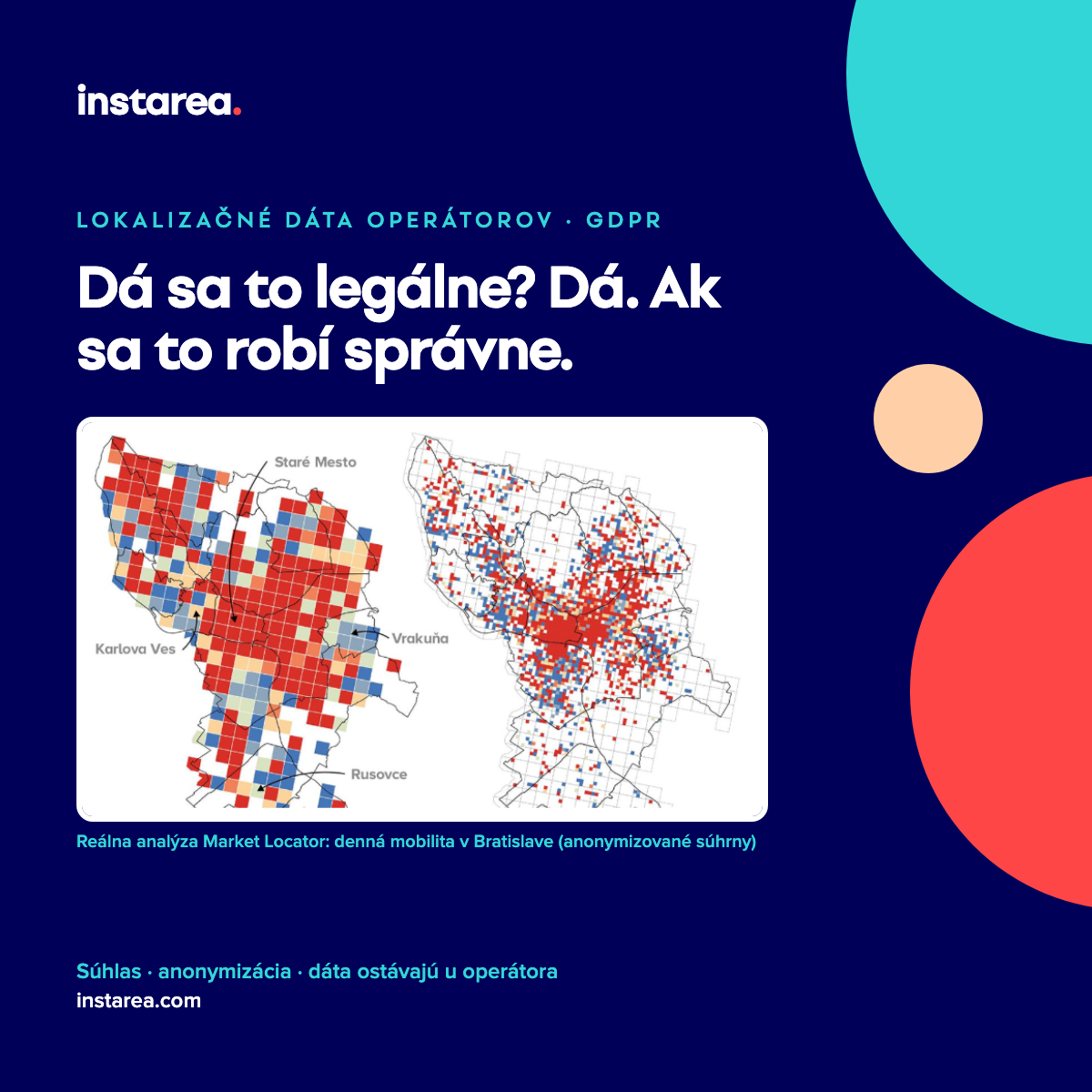
Location data from mobile networks: added value, done safely
A mobile network produces a lot of location data in normal operation, and most of it never serves anyone again. It can create value: store footfall, tourist flows, transport planning, offers for customers who want them. The key is to do it safely: a separate consent for each use, data never leaves the operator, only anonymised summaries go out. We wrote down how it works in practice and where the method has limits.
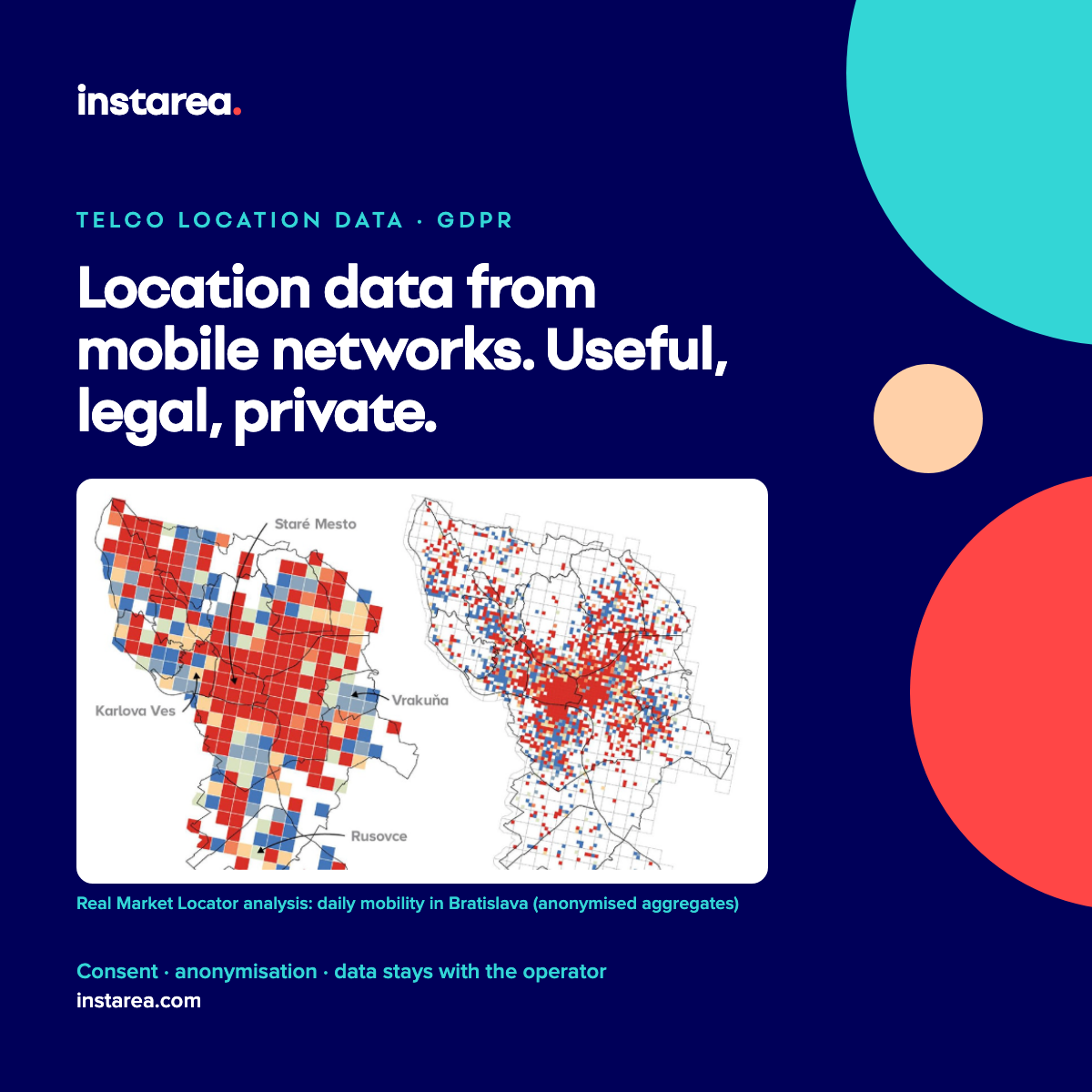
How operators turn location data into value while subscribers' privacy stays protected
Every mobile network produces location signals as a by-product. Our new explainer shows how operators use them safely in the EU: a separate consent for each use, data that never leaves the operator, only anonymised aggregates going out, and the honest limits of the method. Based on 10+ years of running Market Locator / Crowdspector with operators in Slovakia and the Czech Republic.

Who implements CAMARA network APIs in Central Europe — and what operator-side integration involves
Who exposes, aggregates and sells CAMARA network APIs, what operator-side integration involves, and how it looks in Slovakia and the Czech Republic.

Monetising telco location data in the EU: how it works with GDPR
How mobile operators use network location data under GDPR and ePrivacy: anonymisation vs pseudonymisation, consent vs aggregated uses, legal bases, limits.

Measuring train occupancy from mobile network data: methods and deployments
Five ways to measure train occupancy (ticketing, manual counts, APC sensors, Wi-Fi/Bluetooth, mobile network data), their limits, privacy, and a Slovak example.
How full is every train, really? Trainspector measures occupancy per connection
Trainspector, built by instarea and delivered with Slovak Telekom for ZSSK, turns anonymized mobile network data into occupancy for each individual train connection: passenger-kilometres per track segment and boarding/alighting points, measured from locomotive geolocation combined with passenger geolocation.
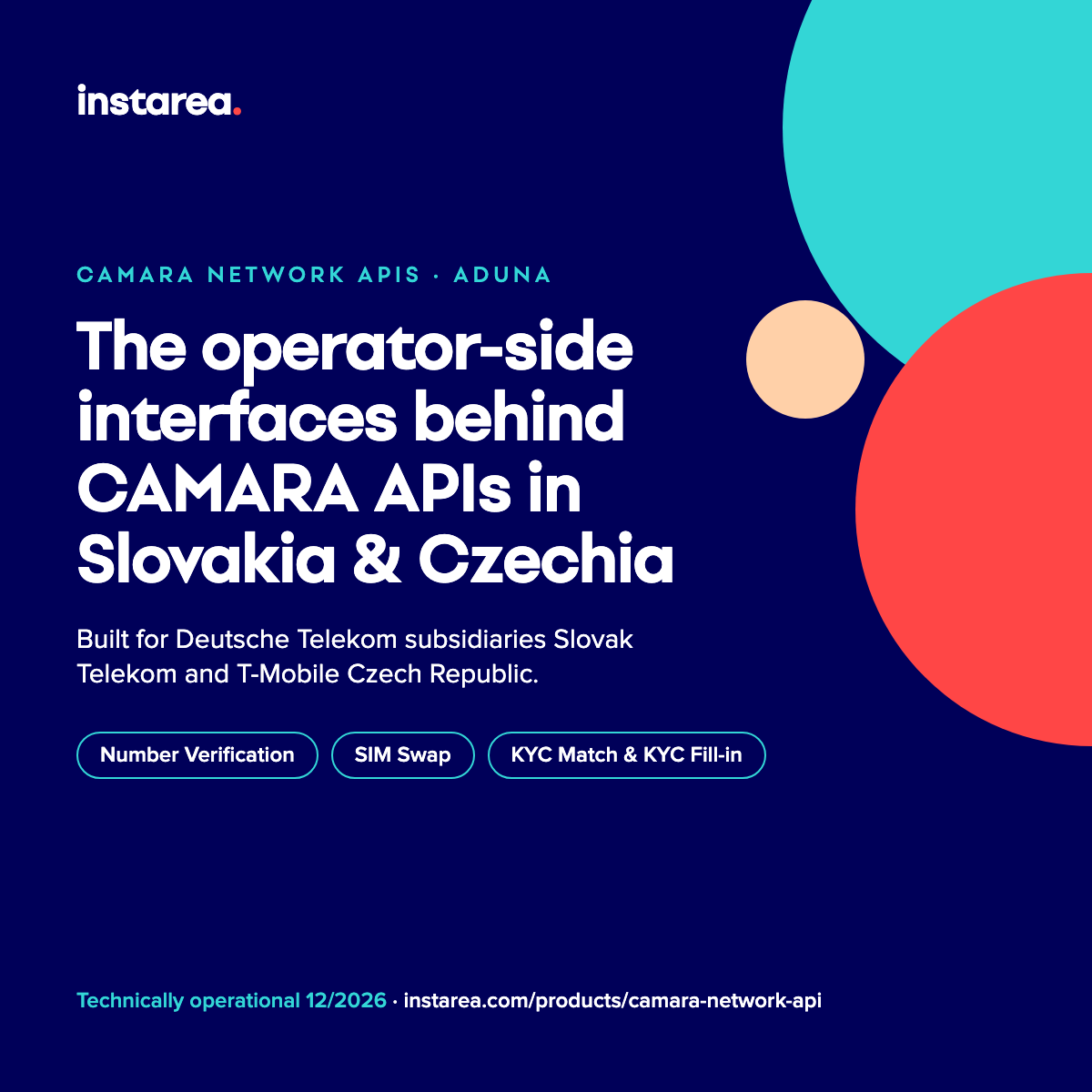
Network APIs only work when the network can answer — that's the part we build
instarea built the interfaces to operator systems that let Deutsche Telekom group CAMARA APIs (via Aduna / GSMA Open Gateway) answer for Slovak Telekom and T-Mobile Czech Republic: Number Verification, SIM Swap and KYC Match / Fill-in. Technically operational 2026/2027; commercial launch is each operator's decision.
CAMARA Network APIs for Deutsche Telekom in Slovakia and Czech Republic — operator interfaces built by instarea
instarea built the interfaces to the internal systems of Slovak Telekom and T-Mobile Czech Republic (Deutsche Telekom subsidiaries) that feed Deutsche Telekom's CAMARA Network APIs — Number Verification, SIM Swap, KYC Match and KYC Fill-in — exposed via Aduna. Technically operational in Slovakia and the Czech Republic in 2026/2027; the commercial launch is each operator's decision.

From Mobile Network Data to Foot Traffic: The 7-Step RGL Flow
How RGL turns mobile network data into real-time foot traffic — a 7-step flow from geofence setup to coupon redemption, powered by 8 years of telecom infrastructure.
From Mobile Network Data to Foot Traffic — We're Piloting the Concept
We're piloting a concept that turns mobile network data into real-time foot traffic. 7 steps, one API, no app required. Here's how RGL works — from geofence setup to coupon redemption.
Do More With Less: How 1 Engineer + AI Agents Replaced a 5-Person Team
HomeGrif runs on 1 senior engineer + AI agents — delivering the output of a 5-person team. Not in theory: on a live research prototype, for 12+ months. Here's the architecture.
Do More With Less: How 1 Engineer + AI Agents = 5-Person Team
HomeGrif runs on 1 senior engineer + AI agents — delivering the output of a 5-person team. Not in theory. In production for 12+ months. Here's the architecture.
HomeGrif: How We Build a Product Nobody's Seen Before
Session randomization, institutional co-design, and user co-creation — the three pillars behind building equity release for a market that doesn't exist yet.
We Don't Do Market Research. We Let the Market Research Itself.
How HomeGrif uses session randomization instead of traditional surveys to discover what users actually want — by watching behavior, not asking questions.
HomeGrif: Building a Product Nobody's Seen Before
HomeGrif uses session randomization, institutional co-design, and user co-creation to build equity release for Central Europe — a €64B market with zero local players.

Oncoteam: AI Tool for Cancer Patient Advocates
instarea's CEO built an open-source AI tool for cancer patient advocates — monitors 500+ clinical trials, analyzes lab trends, works through WhatsApp and Claude.ai. All data stays in the patient's Google Drive.
Oncoteam: Open-Source AI for Cancer Patient Advocates
Peter built Oncoteam — an open-source AI tool for cancer patient advocates. 19 agents, 500+ clinical trials, lab analysis, WhatsApp + Claude.ai integration. Free during active treatment.
Oncoteam: Open-Source AI for Cancer Patient Advocates
Peter built two open-source tools for cancer patient caregivers — Oncofiles organizes medical documents, Oncoteam analyzes lab trends and matches clinical trials. Free during active treatment.

Geo API: New Revenue Stream on Proven Telco Infrastructure
After 8 years running geolocation consent platforms at Slovak Telekom and Orange, instarea is launching Geo API — enabling enterprises and government to use operator location infrastructure via a single integration.
From Hobby to Production — When Your Side Project Needs Real Engineering
Your vibecoded MVP works for 100 users. But what happens at 100,000? Here's when and why you need to elevate from hobby to production-grade engineering.
Geodata Monetization for MNOs — Two Models, One Platform
How mobile network operators can turn geolocation consents into revenue through first-party and third-party data monetization models — with a single GDPR-compliant platform.

Geodata Monetization for MNOs — Two Models, One Platform
Mobile operators sit on one of the most valuable data assets in the world. Two clear monetization paths: consent-based geolocation and GeoAPI for trusted parties.
Geodata monetization for mobile operators — why it matters in Slovakia too
Geodata monetization for mobile operators — why it matters in Slovakia too At instarea® is.