Update, November 2026: HomeGrif is a research and measurement prototype (calculator, legal framework, heir protection). The product is not launched in any country; we are looking for a financial partner.
Every startup says "we're data-driven." Most of them mean "we ran a survey."
At HomeGrif, we built something different: a session randomizer that turns every visitor into an unwitting market researcher. No forms. No interviews. No "on a scale of 1 to 10, how likely are you to..."
Just real behavior, from real people, producing real product insights.
The Problem With Surveys
Traditional market research has a fundamental flaw: people lie. Not maliciously — they just can't accurately predict their own behavior. When you ask someone "would you use equity release?", their answer reflects social desirability, current mood, and the framing of the question. It doesn't reflect what they'll actually do when presented with a calculator and real numbers.
This matters even more when you're building for a market that doesn't exist yet. In Central Europe, equity release has zero consumer awareness. You can't survey people about a product they've never heard of and expect useful answers.
How the Session Randomizer Works
When a visitor lands on HomeGrif, the platform shuffles their starting parameters:
- Property value range: Some visitors start at €80K, others at €200K, others at €350K
- Age bracket: The preselected age group varies per session
- Motivation tiles: The order and emphasis of motivation options (pension supplement, home renovation, family support, debt consolidation) are randomized
- Segment presentation: Different starting configurations highlight different use cases
This isn't A/B testing — that's too narrow. A/B tests compare two variants. We're running a full behavioral matrix across multiple dimensions simultaneously.
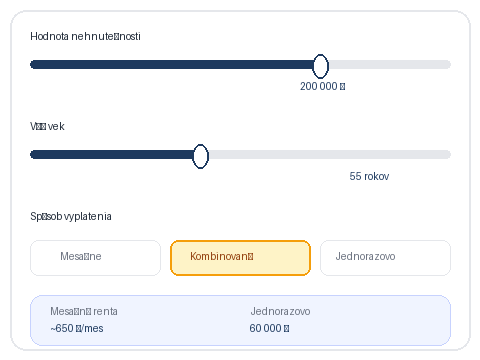
Every interaction generates a data point. Every slider adjustment, every tile selection, every "calculate" button click tells us something about what resonates.
What the Data Revealed
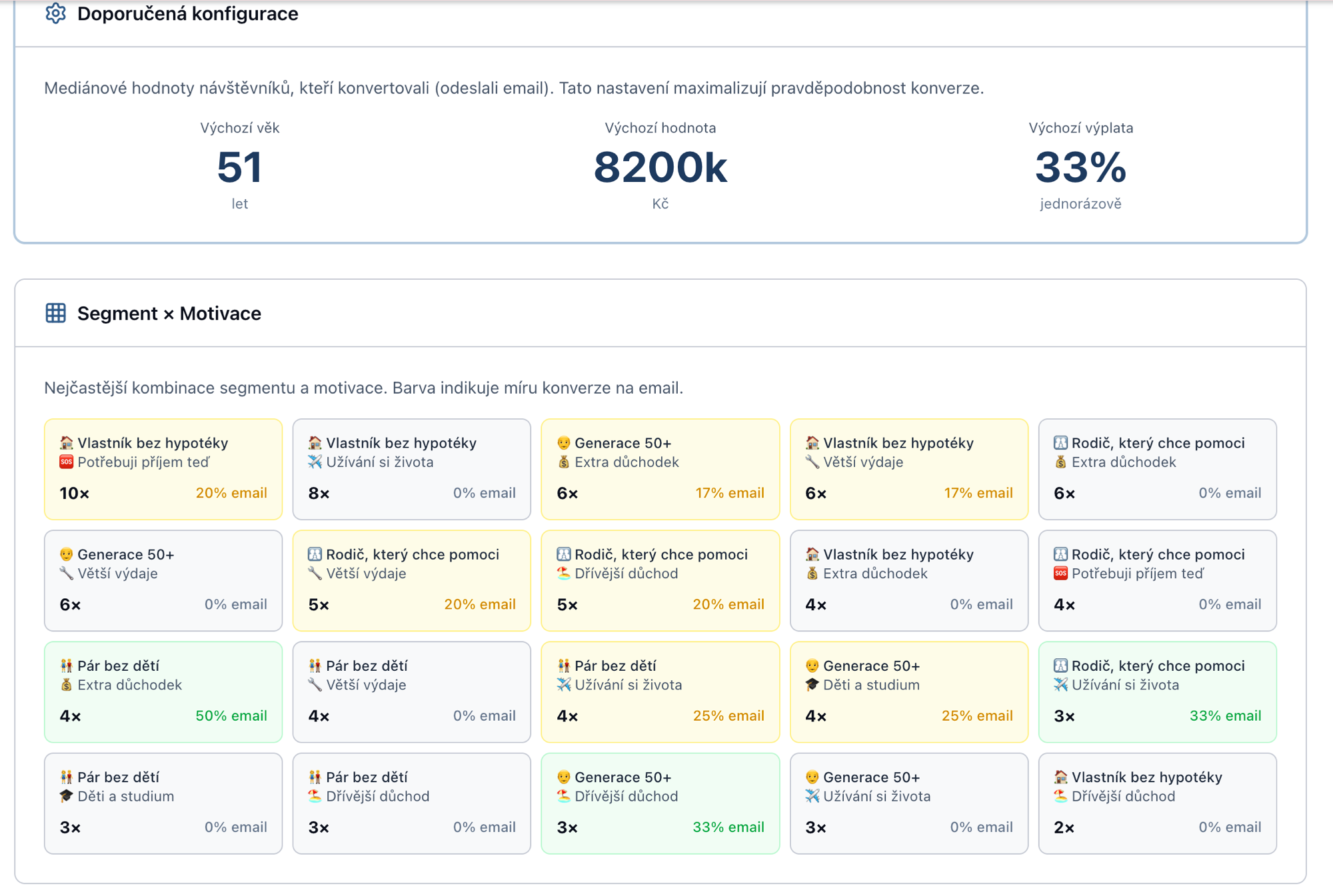
After analyzing thousands of sessions, clear patterns emerged — patterns that no survey could have predicted:
The Core Segment
Age 50-59, property value €120-200K. Not retirees (who might seem obvious), but pre-retirees planning ahead. They're the most engaged group by every metric: time on page, calculator interactions, feedback submissions.
The Dominant Motivation
Pension supplementation (47%). Not home renovation, not debt consolidation — income security. This tells us the positioning should lead with retirement planning, not home equity optimization.
The Counterintuitive Finding
Users engage more when starting values are lower. Higher initial property values didn't increase interest — they decreased engagement. Lower, more realistic starting points made people lean in and start adjusting upward on their own.
This single finding would have been invisible in a survey. Nobody says "I prefer to see smaller numbers first." But their behavior says it clearly.
From Data to Product
The randomizer doesn't just collect data — it directly shapes the product:
- Default calculator values now start at the optimal engagement point, not the marketing-optimistic point
- Motivation framing leads with pension income, because that's what drives actual engagement
- Age targeting prioritizes the 50-59 pre-retirement window
- Institutional pitches are tailored based on which framing generates the most downstream actions
Every bank conversation is backed by behavioral data, not assumptions. When we tell a financial institution that "47% of engaged users cite pension supplementation as their primary motivation," that's not a survey result — it's observed behavior from real platform interactions.
Reusable Beyond HomeGrif
The session randomizer pattern isn't specific to equity release. Any new product launch in an unvalidated market faces the same challenge: you can't survey what doesn't exist.
The approach works for any product where:
- Consumer awareness is zero or near-zero
- Traditional market research would produce unreliable results
- You have a digital touchpoint where behavior can be observed
- The product parameters are adjustable (pricing, features, positioning)
We built it for fintech. But the same pattern could validate a new insurance product, a novel subscription service, or any B2C offering entering a green-field market.
The Bottom Line
Market research is backwards. Instead of asking people what they want and then building it, we built a platform that discovers what people want by watching them use it.
The result is a product configuration that emerged from thousands of real interactions — not from a deck reviewed by committee.
The market researched itself. We just had to build the instrument to listen.
HomeGrif is a research prototype by instarea. Learn more at homegrif.com.