Update, November 2026: HomeGrif is a research and measurement prototype (calculator, legal framework, heir protection). The product is not launched in any country; we are looking for a financial partner.
Most fintech products start with assumptions. We started with questions.
HomeGrif is a research prototype for equity release in Central Europe — a €64B market with zero local players. Instead of guessing what the product should look like, we built the prototype to learn it from real behavior.
Here's what's under the hood.
Session Randomizer
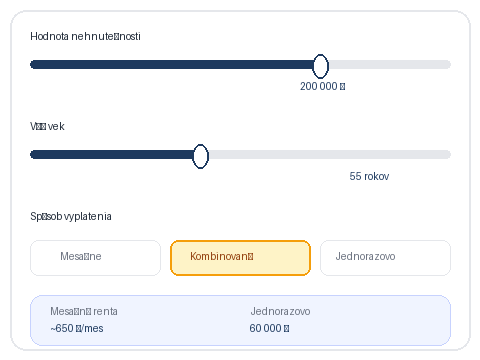
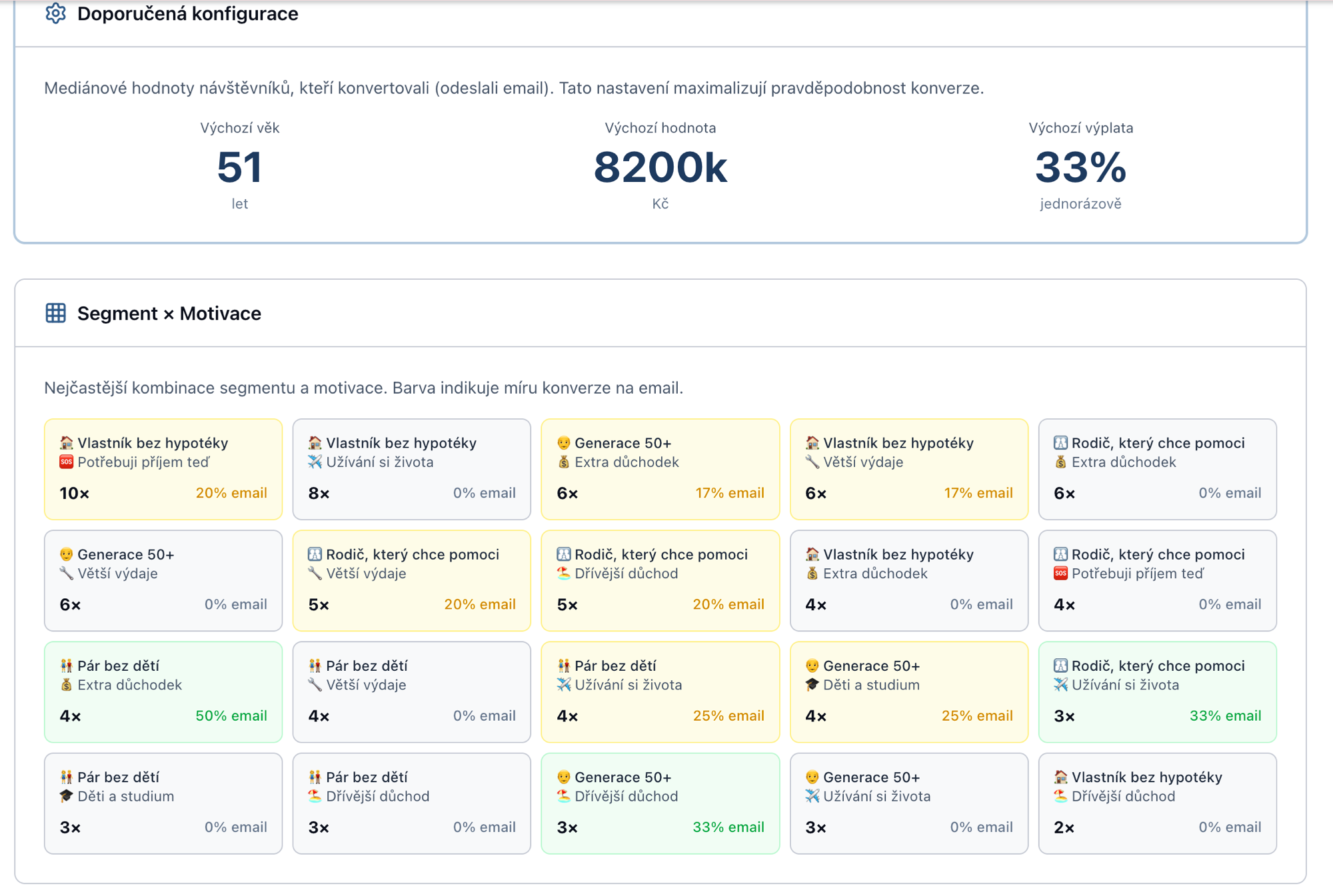
Every visitor sees different starting parameters — property value, age bracket, motivation segment. This isn't A/B testing. It's full behavioral experimentation.
We don't ask people what they want. We watch what they actually choose when defaults shift.
The result? The product profile emerged from data, not interviews:
- Core segment: Age 50-59, property value €120-200K
- Top motivation: Supplementing pension income (47%)
- Surprise finding: People engage more when they see lower initial values
Traditional market research would have told us what people say they want. The randomizer shows us what they actually do.
Institutional Co-Design
We prepared dedicated presentation pages for several financial institutions — each tailored to their strategic language, existing initiatives, and market positioning.
No brand can be named, and there is no partner yet: we are looking for one. But the conversations are real, the pages are live, and the feedback is shaping the concept.
Each institution sees HomeGrif through their own lens:
- One through their parent company's European equity release experience
- One through their social housing mission
- One through their retail innovation pipeline
The key insight: you can't sell a product that doesn't exist by showing a generic deck. You sell it by showing each stakeholder how it fits their strategy.
User Co-Creation
Every visitor can submit feedback directly from any page. It creates a tracked issue, sends confirmation, and feeds straight into the development cycle.
Users don't know it, but they're co-authoring the product — through their clicks, their slider positions, and their words.
The feedback loop is measured in hours, not quarters:
- Visitor interacts with the calculator
- Behavior data feeds into segment analysis
- Feedback triggers a tracked development issue
- Changes ship to the prototype within the same cycle
Why This Matters
This is what building for a non-existent market looks like: you can't validate with sales. You validate with behavior.
Equity release in Central Europe has no incumbents, no pricing benchmarks, no consumer awareness. Every assumption needs to be tested, not with focus groups, but with real interactions on a working prototype.
The conversations continue. The data is compounding. And the product is being shaped by the people who will eventually use it — they just don't know it yet.
More coming.
HomeGrif is a research prototype by instarea. Learn more at homegrif.com.