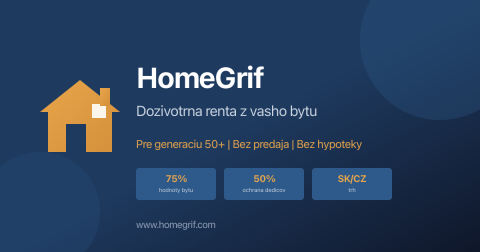
Update, November 2026: HomeGrif is a research and measurement prototype (calculator, legal framework, heir protection). The product is not launched in any country; we are looking for a financial partner.
Can a non-tech CEO build a near-production fintech app? At instarea, we just proved it's possible — and the implications for how software companies operate are profound.
The Experiment
In 8 days. 116 releases. Zero engineering background. Our CEO Peter Fusek built HomeGrif — a retirement equity release calculator for the Czech and Slovak markets — using AI-assisted development tools.
The stack? Nuxt 3, Vue, TypeScript, Tailwind CSS — the same production-grade technologies our engineering team uses daily. The difference: every line of code was generated, reviewed, and iterated through conversation with AI coding assistants, not written from scratch by hand.
The Problem We're Solving
In Slovakia, 91% of seniors own their home. Average pension: €620/month. In Czechia, a flat worth €160-200K, pension €840/month. These seniors sit on significant real estate wealth but live on minimal pensions.
Equity release — the ability to unlock home value as a retirement income supplement without selling or moving — is a mature product in the UK (€4.8B market) and growing across Western Europe. But it doesn't exist in Central Europe. Yet.
The gap is enormous: an estimated 1.2 million eligible homeowners in Czechia and Slovakia combined, with no product serving them. No calculator, no comparison tool, no educational platform.
What Was Built
HomeGrif (homegrif.cz / homegrif.com) is a research prototype of a retirement equity release service that:
- Calculates equity release potential — enter your property value, age, and location to see estimated monthly payments
- Compares scenarios — lifetime annuity vs lump sum vs hybrid models, with indicative calculations
- Educates — explains equity release in plain language for a non-financial audience (seniors and their families)
- Mobile-first — designed for the reality that many seniors access the web through smartphones, often with help from family members
The app handles localization (Czech and Slovak), currency conversion, and jurisdiction-specific pension data. It includes an interactive calculator that runs client-side with no server dependency — fast, private, and works offline.
The 116-Release Journey
What made this experiment instructive wasn't just the speed — it was the iteration pattern:
- Days 1-2: Core calculator logic, basic UI. 23 releases. Getting the math right.
- Days 3-4: Design polish, responsive layout, CZ/SK localization. 31 releases. Making it look professional.
- Days 5-6: SEO, meta tags, Schema.org markup, performance optimization. 28 releases. Making it discoverable.
- Days 7-8: Edge cases, accessibility, legal disclaimers, analytics. 34 releases. Making it ready to show.
Each "release" was a meaningful commit — not a typo fix, but a feature addition, design change, or bug fix. The AI assistant handled the implementation; the CEO provided the domain expertise, design taste, and business logic.
What "Vibecoding" Actually Means
The term "vibecoding" has been thrown around to describe AI-assisted development. But having done it for real, here's what it actually looks like:
What AI handles well:
- Translating business requirements into working code
- Consistent styling and responsive design
- Boilerplate: SEO tags, sitemap generation, accessibility attributes
- Refactoring and code cleanup
- Finding and fixing bugs when given clear error messages
What still requires the human:
- Domain expertise — understanding actuarial tables, pension regulations, real estate valuation
- Design judgment — knowing when a layout "feels right" for the target audience
- Business logic — deciding which features to build and which to skip
- Quality bar — recognizing when something is good enough for production vs when it needs more work
- Legal and compliance — knowing what disclaimers are required in financial products
The CEO isn't replacing engineers. The CEO is becoming a more effective product owner — one who can prototype at the speed of thought, validate ideas before committing engineering resources, and speak the same language as the development team.
Why This Matters for instarea
At instarea, we've built 28 products over 18 years. We know the difference between a prototype and production software. HomeGrif started as a vibecoded experiment and it is still a prototype today: a calculator, a legal framework and a way to measure what people actually choose. Turning it into a launched product needs a financial partner first.
The takeaway isn't "CEOs should replace developers." It's that the barrier between idea and working prototype has collapsed. A business leader who understands their domain can now go from napkin sketch to functional app in days, not months. The engineering team then takes over to make it scalable, secure, and maintainable.
This is the future we're building at instarea: domain experts who prototype with AI, engineering teams who scale to production, and a product factory model that moves from concept to market faster than ever before.
Originally shared on LinkedIn — December 18, 2025.